Circular Poultry Agricultural System
The poultry industry operates as a complete circular economy. This sustainable cycle eliminates waste, reduces carbon footprint, and creates continuous value throughout the agricultural supply chain.
11/27/20251 min read


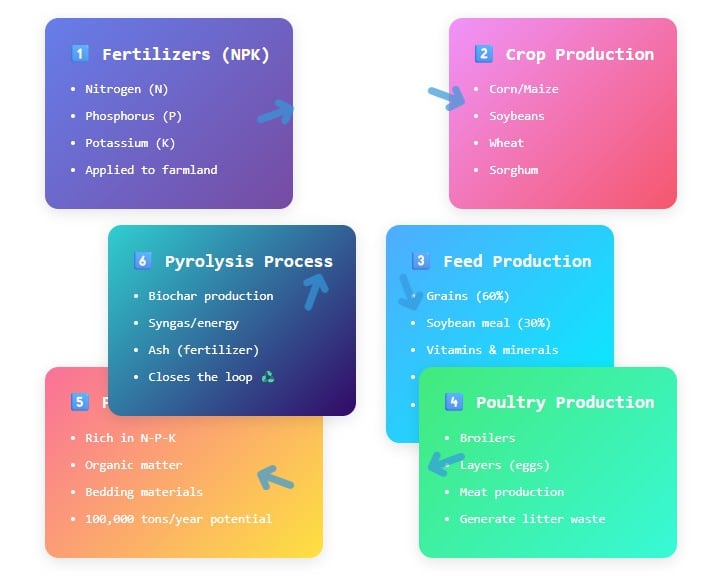
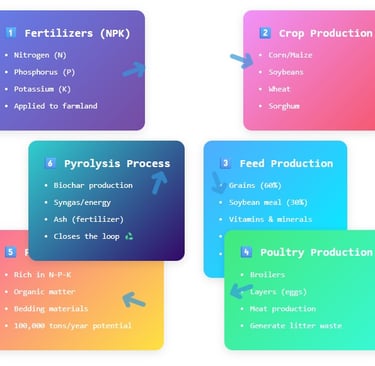
The poultry industry operates as a complete circular economy. Synthetic fertilizers (nitrogen, phosphorus, potassium) nourish crops like corn and soybeans. These crops are processed into poultry feed containing 60% grains and 30% soybean meal, plus essential vitamins and minerals. Poultry consume this feed to produce meat and eggs while generating nutrient-rich litter waste. Through pyrolysis, this waste transforms into valuable biochar, energy, and ash containing the same N-P-K nutrients. This ash returns to farmers as organic fertilizer, closing the loop. This sustainable cycle eliminates waste, reduces carbon footprint, and creates continuous value throughout the agricultural supply chain.
Circular Agricultural System
Poultry production & Waste to Energy Integration
Complete Circular Economy: Fertilizers → Crops → Feed → Poultry → Litter Waste → Pyrolysis → Fertilizer/Biochar
Value Chain Integration: Your poultry litter pyrolysis operation can produce biochar and ash that returns nutrients (N-P-K) to crop farmers, creating a sustainable loop.
Market Opportunity: Ash from pyrolysis contains phosphorus and potassium - essential fertilizer components that can be sold to the same farmers growing corn and soybeans for poultry feed.
EU CBAM Impact (2026): This circular system reduces carbon footprint by eliminating synthetic fertilizer production and utilizing waste streams - <span class="highlight">potentially avoiding carbon taxes</span> on agricultural inputs.
Scale Potential: With your capacity to process 100,000 tons/year of poultry litter, you can produce significant quantities of biochar and fertilizer products to close regional agricultural loops.