
Understanding Scope 1, 2, and 3 Emissions: The Complete Guide to Corporate Carbon Footprints
12/11/20252 min read
As global CO2 emissions reached 36.3 gigatons in 2024, understanding how businesses contribute to climate change has never been more critical. The Greenhouse Gas Protocol divides corporate emissions into three distinct scopes, each representing different sources and control levels.
What Are the Three Scopes?
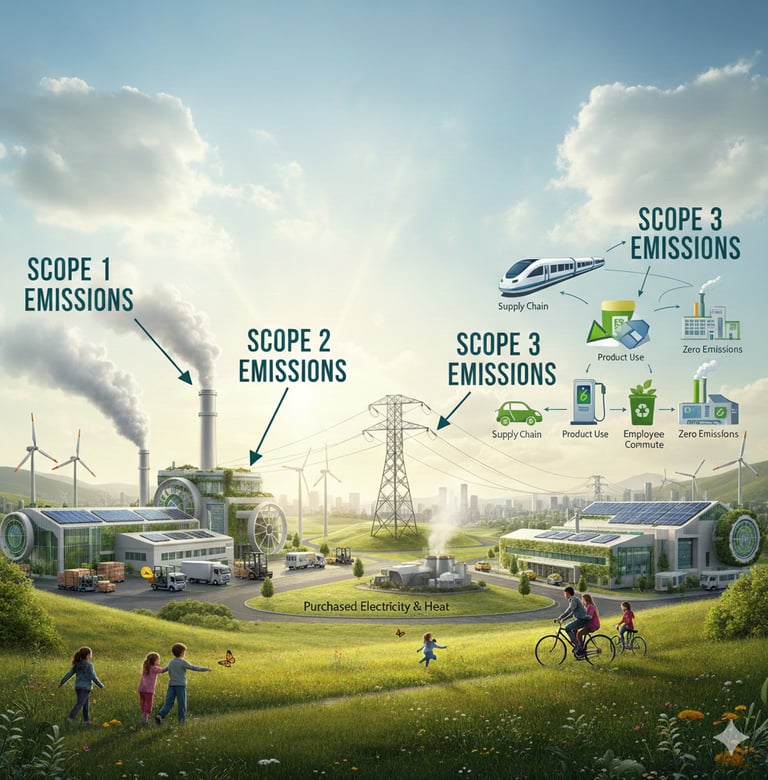
Scope 1: Direct Emissions These are emissions from sources you own or control directly. Think company vehicles burning fuel, on-site boilers and furnaces, manufacturing processes releasing gases, and refrigerant leaks from air conditioning units. If the smoke comes from equipment you own, it's Scope 1.
Scope 2: Indirect Energy Emissions Scope 2 covers emissions from purchased electricity, steam, heating, or cooling. While the power plant creates the emissions, they result from your energy consumption. Globally, Scope 2 represents at least one-third of total GHG emissions, making electricity generation one of the largest emission sources worldwide.
Scope 3: Value Chain Emissions The most complex category encompasses all other indirect emissions across your value chain—from supplier manufacturing and business travel to product use and end-of-life disposal. For most companies, Scope 3 represents 75-90% of their total carbon footprint, with some sectors like financial services approaching 99%.
Which Scope Is Most Critical?
While Scope 3 dominates most companies' footprints, the energy sector accounts for 75.6% of global emissions, highlighting why Scope 2 reduction remains globally vital. However, true climate action requires addressing all three scopes simultaneously.
Global Actions for Emission Reduction
For Scope 1: Companies are transitioning to electric vehicle fleets, upgrading to energy-efficient equipment, and implementing renewable natural gas. Manufacturing facilities are optimizing compressors and chillers, which can reduce energy consumption by up to 30%.
For Scope 2: The shift to renewable energy is accelerating through solar panel installations, power purchase agreements, and renewable energy certificates. Organizations increasingly target 100% renewable electricity as a key decarbonization milestone.
For Scope 3: Global initiatives focus on supplier collaboration, with major corporations helping partners measure and reduce emissions. Companies are redesigning logistics networks—one food company reduced emissions 18% by consolidating 53 sites into seven. Product redesign for longevity and recyclability is becoming standard practice.
The Path Forward
Meeting the Paris Agreement's 1.5°C target requires reducing global emissions by nearly half by 2030. Science-based targets recommend 4.2% annual reductions for Scope 1 and 2, and 2.5% for comprehensive targets including Scope 3. Success demands unprecedented collaboration across entire value chains—from suppliers to customers—making climate action not just an environmental imperative, but a business necessity.